HUATAO Screw Flight Forming Catalogue: website edition
Text-only model specifications adapted from the supplied HUATAO catalogue, with source references and selection limits.
View in technical resourcesUse your flight geometry and output requirements to compare sectional forming, continuous cold rolling and mould winding.
Identify whether the drawing calls for separate segments or a continuous helix. Supply OD, ID, pitch, thickness, hand, material grade and tolerances, with units.
Sectional forming shapes individual blanks in tooling. Continuous cold rolling forms a helix from strip. Mould winding shapes strip around a form or mandrel. Compare material behaviour, changeovers and output expectations using the same drawing.
Ask which material and dimensions can be achieved together and what tooling is required. Request samples or a trial when a critical dimension or material combination is uncertain.
| Route | Incoming stock | Typical output | Confirm before ordering |
|---|---|---|---|
| Hydraulic sectional forming | Individual blanks | Separate helical sections | Die, combined material and dimensions, and trial part |
| Continuous cold rolling | Strip | Continuous helicoid flight | Strip grade and width, rolling setup, and dimensional tolerances |
| Mould winding | Strip | Wound spiral flight | Mandrel, achievable geometry, and repeatability |
Text-only model specifications adapted from the supplied HUATAO catalogue, with source references and selection limits.
View in technical resources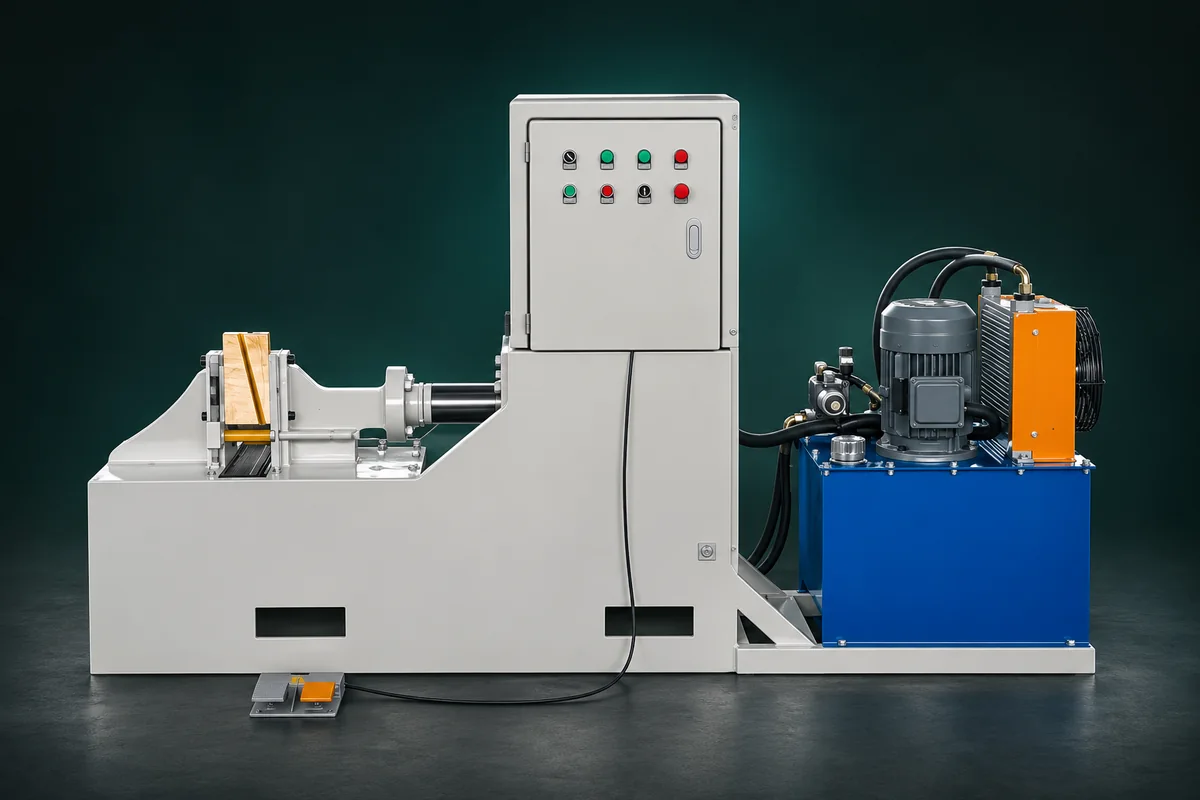 HT120 screw flight forming machineHT120 forms individual screw flight sections for conveyor and auger fabrication. Screen your drawing against the catalogue thickness of 2–14 mm and pitch of 100–400 mm, then confirm the die and combined workpiece limits.HT130 screw flight forming machineHT130 forms individual screw flight sections for conveyor and auger fabrication. Screen your drawing against the catalogue thickness of 2–16 mm and pitch of 100–500 mm, then confirm the die and combined workpiece limits.HT140 screw flight forming machineHT140 forms individual screw flight sections for conveyor and auger fabrication. Screen your drawing against the catalogue thickness of 2–20 mm and pitch of 180–600 mm, then confirm the die and combined workpiece limits.HT150 screw flight forming machineHT150 forms individual screw flight sections for conveyor and auger fabrication. Screen your drawing against the catalogue thickness of 2–20 mm and pitch of 180–600 mm, then confirm the die and combined workpiece limits.
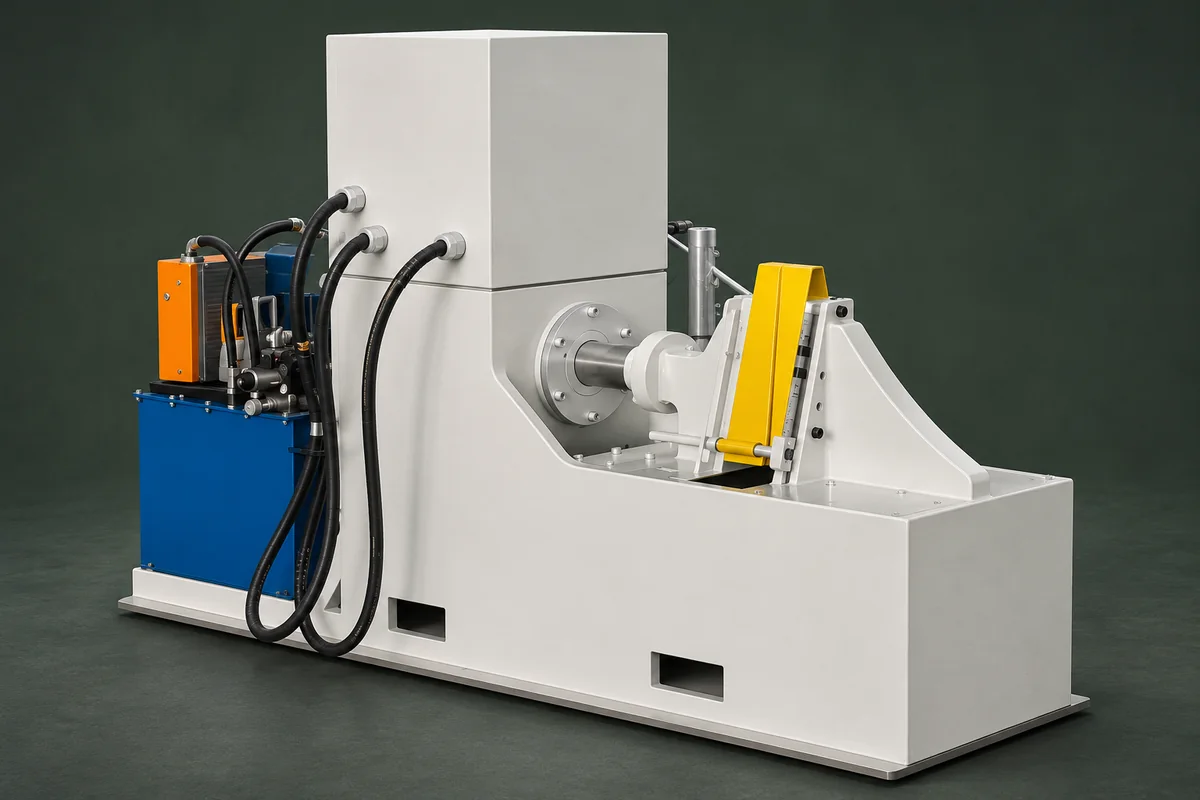 HT160 screw flight forming machineForm individual screw flight sections for conveyor and auger fabrication. Review the HT160 catalogue limits and confirm your workpiece, die, and acceptance criteria.HT180 screw flight forming machineHT180 forms individual screw flight sections for conveyor and auger fabrication. Screen your drawing against the catalogue thickness of 2–28 mm and pitch of 180–900 mm, then confirm the die and combined workpiece limits.HT280 screw flight forming machineHT280 forms individual screw flight sections for conveyor and auger fabrication. Screen your drawing against the catalogue thickness of 2–45 mm and pitch of 240–900 mm, then confirm the die and combined workpiece limits.HT330 screw flight forming machineHT330 forms individual screw flight sections for conveyor and auger fabrication. Screen your drawing against the catalogue thickness of 2–70 mm and pitch of 240–900 mm, then confirm the die and combined workpiece limits.