What Should Conveyor OEMs Verify Before Bringing Shaftless Spiral Forming In-House?
Learn how to compare outsourced and in-house shaftless spiral forming using one drawing, actual order costs and a repeatable machine trial.
Bring a recurring shaftless spiral specification in-house when an approved drawing, your actual order history and a repeatable forming trial show that your shop can accept and deliver it at a competitive cost and lead time. Start with one drawing revision and one recurring order family. Keep the existing external supply route available while you qualify production.
On 30 October 2026, SPIRAC reported that its Nybro workshop in Sweden was operational, with more than 5,000 m² of production space for shaftless spiral conveyors and solids handling systems. Its product literature describes using winding technology to form spiral diameter and pitch together. The announcement gives a facility-level capacity update. It leaves output volumes, equipment suppliers, the forming operations performed at Nybro and any machine procurement plans unspecified. SPIRAC workshop announcement · SPIRAC shaftless spiral conveyors
Which drawing should you qualify first?
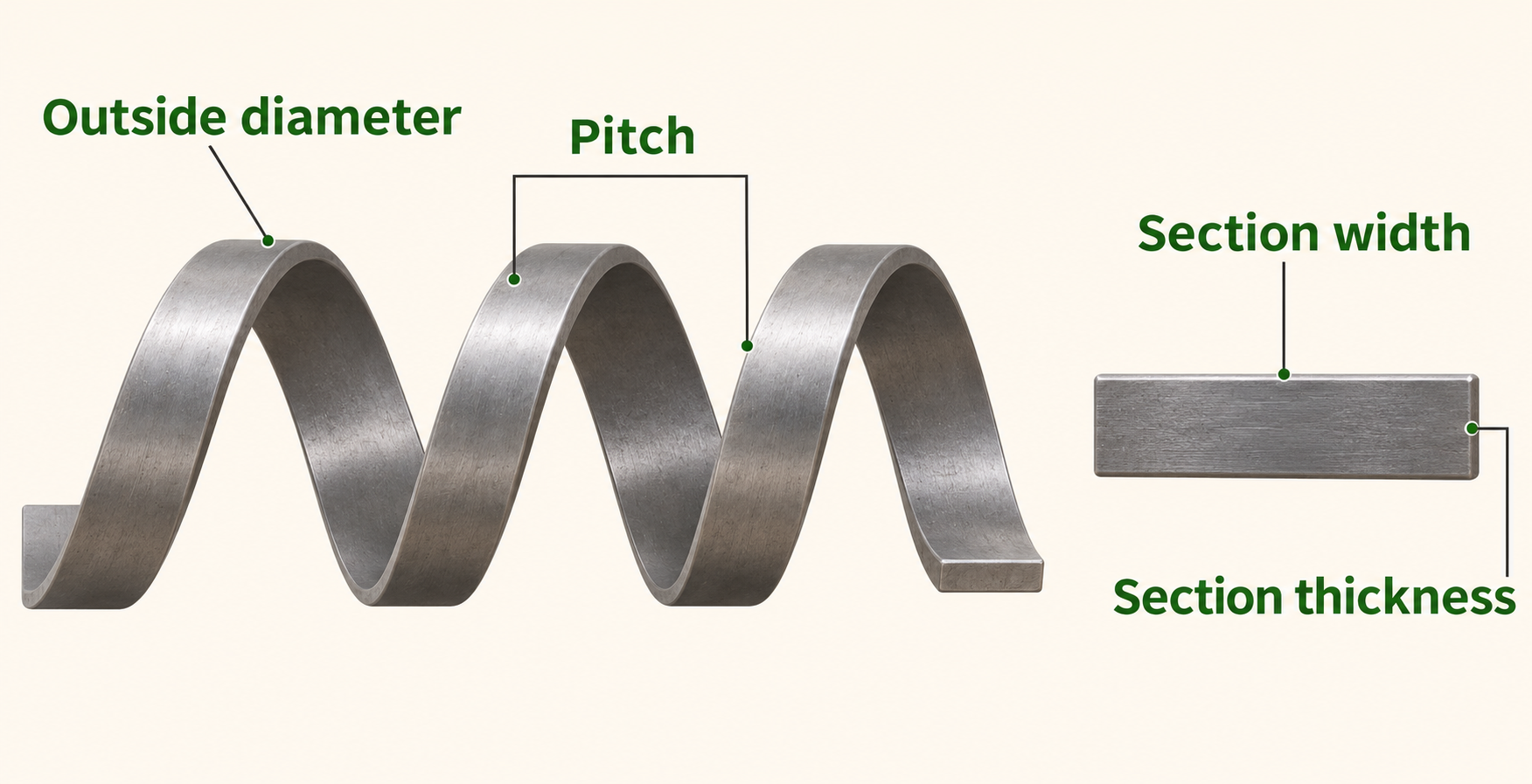
Choose a repeat job that regularly ties up purchasing or delays assembly. A shaftless spiral has an open centre, so the drawing needs to define its own geometry and its fit in the trough. Specify the material grade and stock condition, the radial section width, the section thickness, the outside diameter (OD), and the axial pitch measured over one turn. Add the inside diameter where it is controlled, the handedness with a viewing reference, the active length and the end details. Agree on the inspection condition, including how the loose spiral is supported and which dimensions are checked after joining or assembly.
Pair the drawing with the typical batch size, repeat frequency and acceptance records for recent deliveries. Use measured, accepted parts or approved inspection reports as reference evidence. The forming trial should use the current drawing revision and approved material.
When does in-house forming improve the supply route?
Use the same drawing, quantity and inspection scope for both routes. For outsourcing, use actual elapsed time from order release to accepted receipt. Include freight, incoming inspection and any documented rework. For in-house forming, count stock preparation, setup, tooling, changeover, forming, handling, inspection and downstream work. Check the time available on the shift when the order would actually run.
Compare total cost per accepted spiral and elapsed time to release. Then identify the main source of the delay. If the assembly or joining station is already full, shortening forming time may move the queue without improving shipment dates. Keep unusual grades or infrequent sizes with an external supplier until their geometry and economics justify qualification.
What should a machine trial prove?
Agree on the drawing tolerances and recording method before the trial. Mark the axial datum and measure OD and local pitch at agreed locations, including the ends and intermediate turns. Check the section where the drawing controls finished thickness and width. Record setup time to the first conforming piece, all accepted and rejected pieces, rework and operator time. Repeat the setup and check whether the next run meets the same criteria. If the purchase covers a range of work, include a representative changeover and test the demanding material or section that drives the purchase decision.
HUATAO’s catalogue lists the HT-CY-200 as a mould winding machine for spiral flights. It is a catalogue reference for discussing a winding route. Suitability for a particular shaftless spiral, including a thick section or high-strength material, depends on the drawing, stock and witnessed trial results. HUATAO HT-CY-200
Request a drawing-based review
Send HUATAO one approved drawing, the material grade and stock condition, typical batch size, the current outsourced lead time and your acceptance criteria. Ask which route is worth trialling and what tooling, material and inspection setup the trial would require. Contact HUATAO
Can we qualify a new grade using a trial in mild steel?
A mild-steel trial can help check setup or measurement methods. Qualify the production part in the approved grade and stock condition, because a change in material can change forming loads and springback.
What if the drawing gives nominal pitch but no tolerance?
Ask the design owner to approve the pitch tolerance and measurement stations before the trial. State whether release depends on local pitch, cumulative axial position or both.
Can we keep buying some sizes while we form others in-house?
Yes. Define the qualified range by drawing, grade and geometry. Keep an outsourced route for low-volume sizes, unqualified grades or demand above available shop capacity.
Does a conforming trial spiral prove conveyor performance?
A forming trial qualifies the agreed geometry and repeatability under its trial conditions. If the conveyor has application-specific operating requirements, include a separate assembly or commissioning test under agreed conditions.
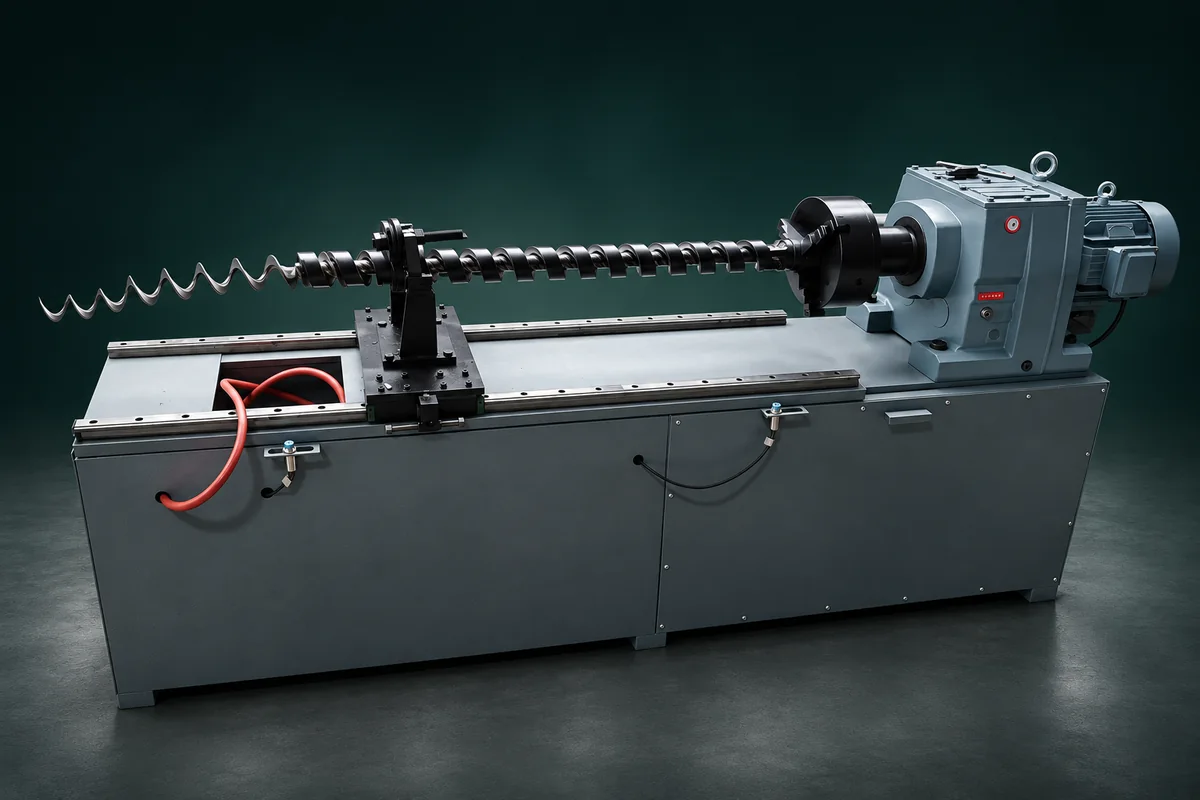 HT-CY-200 spiral blade winding machine