How to Evaluate a Cold-Drawn Conveyor Screw Technology Transfer
Use a same-part trial, thickness map and return changeover to evaluate the Austrian technology offer before agreeing to transfer.
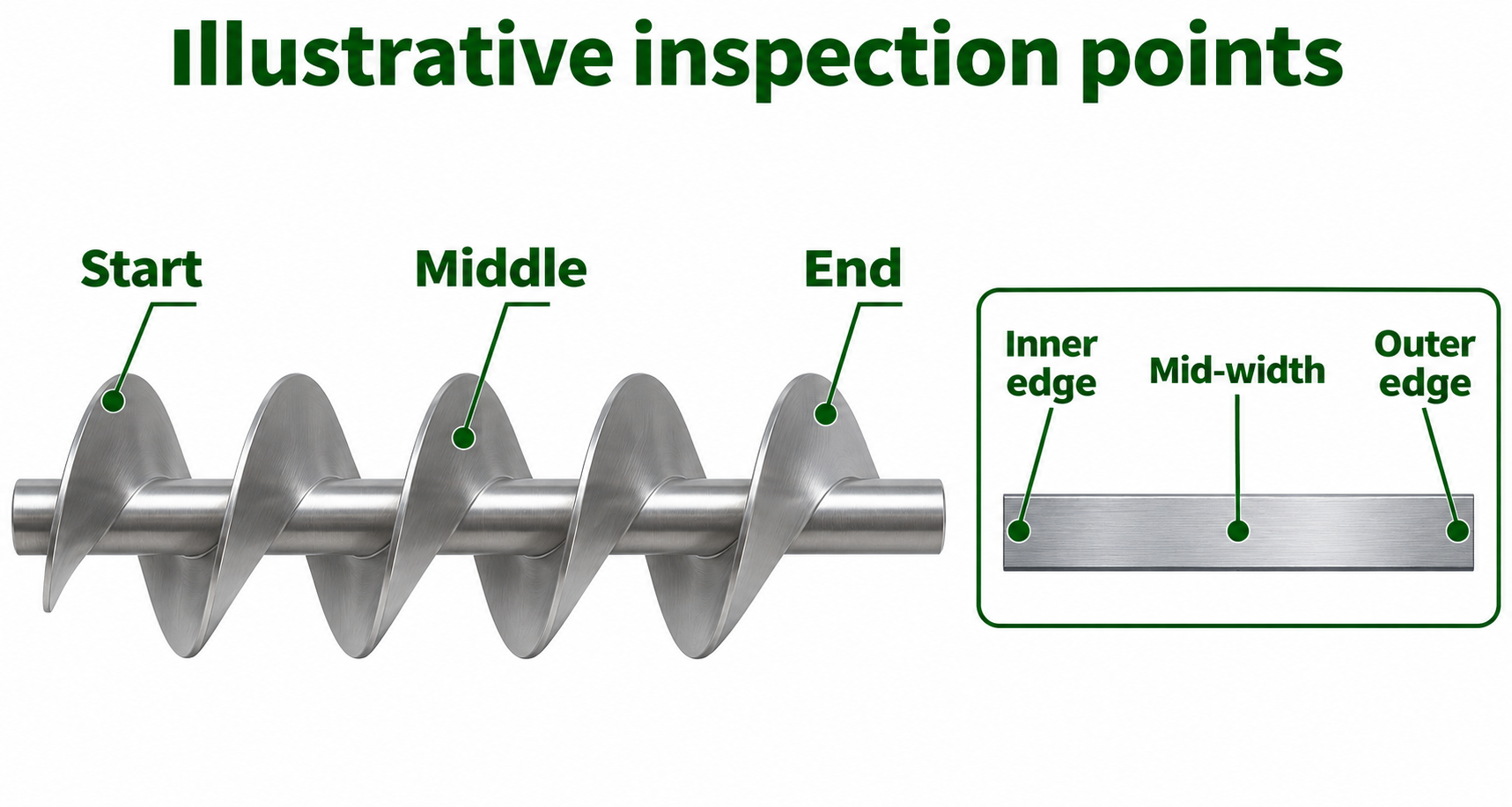
Before buying a cold-drawn conveyor screw process, ask the provider to make a sample to the same approved drawing and material specification you use today. Agree on where thickness and pitch will be measured, then repeat the trial after a tooling change. Make operator training and spare parts part of acceptance so your team can reproduce the result after handover.
Enterprise Europe Network (EEN) lists a technology-transfer offer from an unnamed Austrian small or medium-sized enterprise under reference **BOAT20261009007**. The listed validity is 9 October 2026 to 9 October 2027. The page shows no separate publication date. The offer proposes a commercial agreement with technical assistance. Machinery, process know-how, documents and training are among the items to clarify in negotiations. The company reports continuous segments up to 3,000 mm and little change in material thickness during forming. These are supplier-reported claims. Treat them as questions to test on your parts. Enterprise Europe Network offer BOAT20261009007
Compare the same part on both routes
Start with a recurring conveyor screw or flight drawing. Specify the revision, steel grade and stock condition, outside and inside diameters, pitch, handedness, active length and end details. Send the same requirements to the transfer provider and to your incumbent supplier or internal production team. Use equivalent stock for the comparison and document any differences. Agree on the condition in which the part will be checked, including how it will be supported and whether acceptance applies to loose flighting or to an assembled screw.
Ask the provider to demonstrate the longest length and the hardest material-and-geometry combination that you actually plan to buy or make. If the listed maximum length matters to the business case, test that length in the required grade and geometry as a defined trial job. The listing gives no part-specific tolerance or capability matrix. The term “cold drawing” describes the process offered in the listing. Evaluate any cold-rolling alternative against the same finished drawing and acceptance plan, using evidence from its own trial. EEN offer scope and process claims
Turn thickness and dimensional claims into acceptance criteria
Record incoming stock thickness and map the formed section at consistent points across the flight width, such as the inner edge, mid-width and outer edge where the drawing permits. Repeat those checks near both ends and at agreed intermediate turns. Document the gauge, support and measurement method. Set a minimum finished thickness and any allowed variation in the approved plan before the trial, and report individual values so a thin edge stays visible in the results.
Check local pitch over individual turns and cumulative axial position where the assembly depends on it. Measure the diameters, length and end geometry against their tolerances. If material properties after forming matter to the application, specify which properties need supporting records or test results. Mark any out-of-tolerance areas on the inspection sheet and attach it to the sample identification and stock record.
Repeat the setup and test what the buyer will inherit
Run the representative job, change over to a second specification, then return to the original setup. Have the receiving operator perform the return setup with the proposed instructions and agreed assistance. Record tooling changes, elapsed time to the first conforming part, accepted output, rejected stock and any supplier interventions. Use those records to compare production cost and lead time against your existing route.
Before agreeing to transfer, list the machines, tooling, drawings, setup instructions and maintenance documents included. Agree on operator and maintenance training, how competence will be demonstrated, and what support is available after start-up. Ask for a list of wear parts and critical spares with part numbers, lead times and replenishment responsibilities. For custom tooling, clarify whether the buyer can make or source replacements and which documents and rights are included. Put the trial results and handover obligations into the acceptance schedule.
Frequently asked questions
### Is 3,000 mm an accepted length for our particular screw?
The offer gives a stated maximum segment length. Ask for a conforming sample at your required length, section, grade and pitch, and check any handling or joining constraints. EEN offer
### Can the provider use a different grade for the machine demonstration?
A substitute can demonstrate the workflow. Use the production grade and stock condition to qualify your part, or record approval of an alternative through your engineering release process.
### What if the provider can make one acceptable piece but struggles after changeover?
Record the initial result and the failed return setup separately. Agree on corrective action and a repeat test with the receiving operator before treating setup repeatability as accepted.
Request a drawing-based trial
Send EEN reference **BOAT20261009007** to your local Enterprise Europe Network contact via the listing’s contact route. Share one approved drawing, the stock grade and condition, your normal batch size and a proposed inspection sheet. Ask the provider to confirm a same-part trial, a return changeover and a written list of the training, tooling and spares included in the transfer. Open the original EEN offer