Hopper Bridging or Screw Geometry? What to Verify Before Buying New Flights
Use evidence at the hopper outlet and screw inlet to decide which equipment deserves the first retrofit review.
In a 1 July 2025 AskEngineers discussion, a poster who described working with an iron oxide powder feed reported caking in humid conditions and intermittent loss of feed to a downstream screw. Comments discussed flow aids. The reported site conditions and results were self-described, and the discussion provides no verified retrofit outcome or evidence of flight-forming equipment procurement.
Determine whether material reaches the screw
Compare normal and interrupted runs at comparable feed demand. Log powder lot and condition, storage time, refill level, elapsed time after refill, screw speed, available drive-load trends and measured discharge. Use existing approved instrumentation or safe observation arrangements to check whether material still covers the inlet during the event. Keep guards in place during operation and refer inspections requiring access to the site’s isolation procedure.
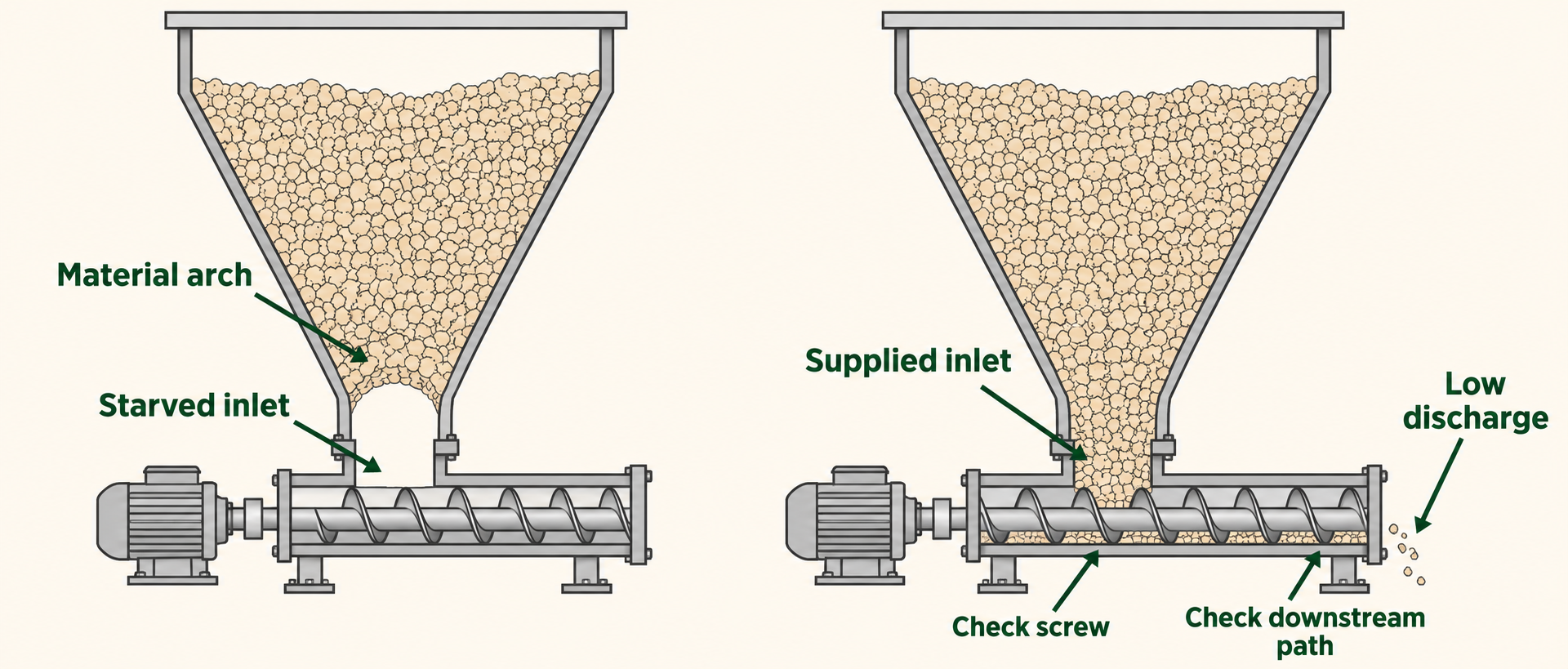
Follow the evidence upstream or downstream
If material remains in the hopper but a bridge interrupts supply at the outlet, prioritise a hopper and bulk-solids flow review. Ask the reviewer to consider material flow data, moisture or storage conditions and the outlet geometry before selecting an aid. If the inlet remains supplied while discharge drops, investigate downstream restrictions and verify the drive and screw condition before changing flight geometry. A drive-load trend alone cannot distinguish these causes. KWS’s engineering guide describes how inlet supply, screw design and speed interact in a screw feeder.
Define the retrofit test before getting quotes
State the symptom, the operating conditions that reproduce it, and the inlet and discharge evidence. If tests point to the screw, issue the actual inlet envelope, flight drawing and observed operating range for review. Compare the baseline and proposed change using the same material conditions and measures such as interruptions and stable discharge. Have the site engineering team approve any proposed flow aid and its test conditions. The RFQ checklist can capture the resulting scope.