Stock the Screw or Keep the Drawing? A Conveyor Spare-Parts Decision
Give each critical conveyor spare a verified stock, drawing-based rebuild or repeat production route.
In an undated case report, KWS describes supplying a screw, end shaft, drive shaft and bearings for GAF’s Tampa facility after Motion requested emergency assistance over a holiday weekend. KWS identifies stock part numbers. The case documents a stock replacement route and gives no evidence of a forming-machine purchase or an on-site forming operation.
Stock complete items where fit is verified
Map each conveyor tag to installed components and approved part numbers. Confirm the revision or substitute against the mating interfaces and a fit record before adding it to inventory. Weigh the cost of a production stoppage against replenishment time, including out-of-hours access. Set a reorder trigger and confirm where the item is held and who can release it.
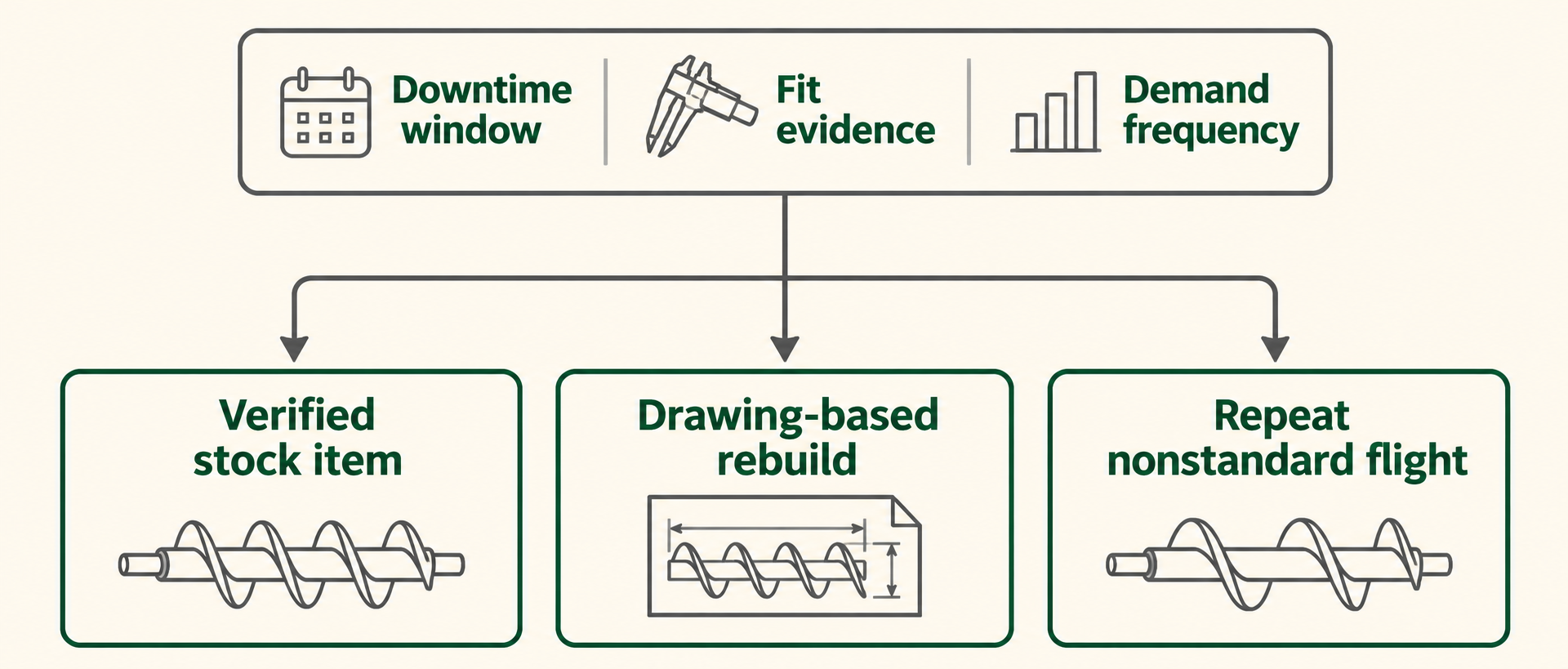
Rebuild uncommon screws from controlled drawings
For a custom assembly with low failure frequency, retain the approved assembly drawing and revision, the linked interface drawings, the material specification and a qualified rebuild source. Check the rebuild lead time against the outage window, including material procurement and inspection. Where the lead time exceeds what operations can absorb, assess a dedicated spare or a supplier reservation.
Keep forming records for repeat nonstandard flights
Where several assets consume the same nonstandard flights, retain the blank drawing, tooling reference, setup record and first-article inspection with the approved revision. Decide whether to hold blanks, formed sections or complete assemblies based on the longest step to recover. Add the chosen route and next action to the maintenance record for each asset tag.