How to Measure First-Good-Part Changeover on a Screw Flight Forming Machine
Time a changeover from the last accepted flight of one job to the first accepted flight of the next.
RoboHelix markets its RX robotic flight-forming platform as reducing setup work and eliminating traditional dies. Its undated product page is a supplier description. Buyers can test the claimed advantage by timing the full interval between conforming parts on their own order mix.
Choose a representative job sequence
Select two drawing revisions from your production schedule and supply the corresponding blank sizes, steel grades and thicknesses. Use the same jobs, acceptance criteria and starting conditions for each machine. Include a change that normally requires stock handling or a different setup. Ask the vendor to identify which steps or materials it stages in advance. Confirm that the actual combination falls within the proposed machine envelope. A blank diameter in a catalogue describes the input, while the finished outside diameter must be checked against the part drawing.
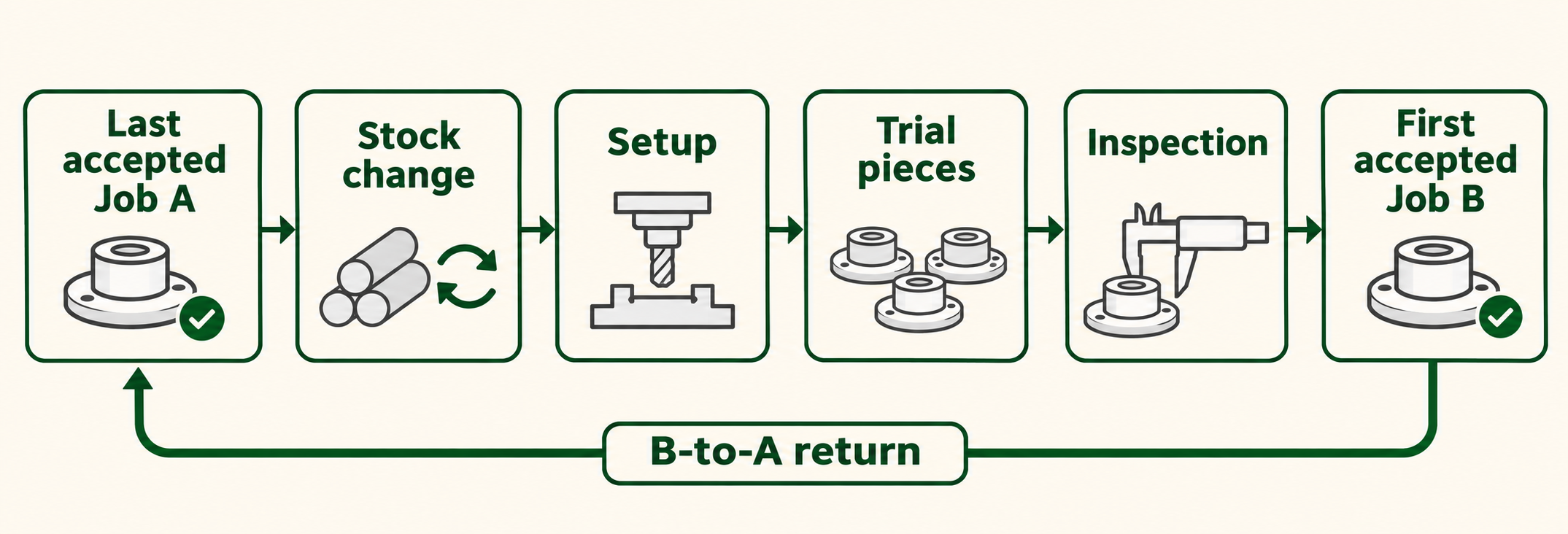
Run the clock through first-piece approval
Start when the previous specification produces its last accepted piece. Stop when the next specification produces its first piece approved against the drawing. Record material changes, tooling or program changes, adjustment, trial scrap, rework and measurement. Log each activity separately and retain elapsed time as the comparison measure, including waits for inspection. Apply the same inspection staffing and rules to both vendors.
Use the result to compare quotes
Run A to B and B to A. Repeat a representative transition with the intended operator and record interventions. Pair each elapsed time with the number of rejected blanks and sustained accepted output after release. Weight each measured transition by how often it occurs in your schedule, then attach the trial sequence and acceptance sheet to the quotation request.